Does Paint Protection Film Turn Yellow in the Sun?
If you’re considering paint protection film (PPF) for your vehicle, one of the most common questions you might ask is: does paint protection film turn yellow in the sun? It’s a fair concern—especially for drivers who park outdoors or live in areas with strong sunlight. The short answer is older PPF used to yellow, but modern PPF is designed not to. Let’s break down why this myth still exists and what really happens today.
Why Did Paint Protection Film Used to Turn Yellow?
Years ago, early generations of paint protection film were made with less advanced materials. These films lacked strong UV inhibitors, so prolonged exposure to sunlight caused oxidation. Over time, this reaction led to a yellow or amber tint, which was especially noticeable on white or light-colored vehicles.
Another contributing factor was poor maintenance. Contaminants such as road grime, pollution, and harsh chemicals could embed into the film’s surface, accelerating discoloration. This combination created the reputation that PPF turns yellow in the sun.
Does Modern Paint Protection Film Turn Yellow in the Sun?
The good news is that modern, high-quality paint protection film does not turn yellow under normal conditions. Today’s PPF is engineered with advanced thermoplastic urethane (TPU) and powerful UV-resistant topcoats. These materials are specifically designed to block ultraviolet rays and prevent oxidation.
Premium films also feature self-healing technology, meaning light scratches disappear with heat from the sun or warm water—without affecting clarity. When installed correctly and cared for properly, modern PPF stays clear for years, even in sunny climates like Northern Virginia.
What Factors Can Still Cause Discoloration?
While quality PPF is highly resistant to yellowing, a few factors can still cause issues:
Low-quality or counterfeit film lacking UV protection
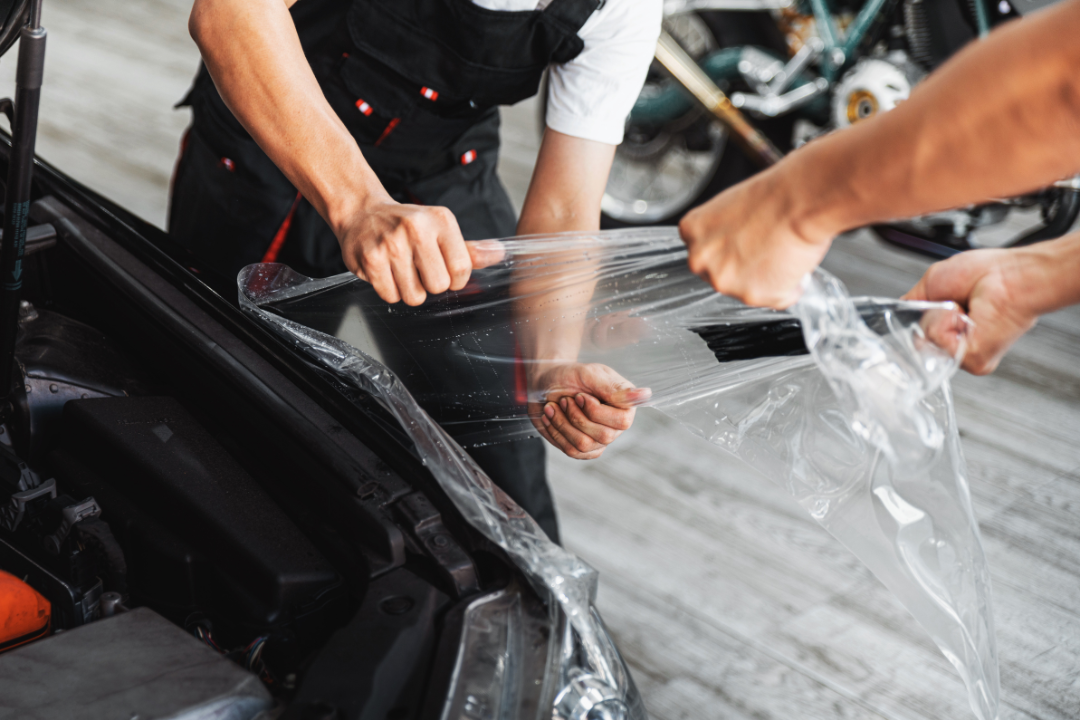
Improper installation, trapping moisture or contaminants
Neglecting maintenance, allowing dirt and chemicals to build up
Leaving damaged or aging film on too long without replacement
This is why choosing an experienced installer matters just as much as choosing the film itself.
If you’re unsure whether your current PPF is aging properly or want expert advice on UV-resistant protection, schedule a free consultation with In and Out in Manassas Park, Virginia. We’ll inspect your vehicle and recommend the best solution for your driving conditions.
Does Virginia’s Sun Make a Difference?
Virginia’s climate includes strong summer sun, humidity, and seasonal temperature changes. These conditions can be tough on a vehicle’s exterior—but high-quality PPF is built to handle them. When installed professionally, modern PPF performs exceptionally well even on vehicles that are parked outdoors year-round.
Regular washing and occasional professional inspections help ensure the film remains clear and effective for its full lifespan, which is typically 7 to 10 years depending on the product.
Should You Worry About Yellowing?
So, does paint protection film turn yellow in the sun? Not if you choose the right film and the right installer. Yellowing is largely a thing of the past, associated with outdated materials and poor-quality installations. Modern PPF is clear, durable, and designed specifically to resist UV damage.
For car owners who want long-term protection without sacrificing appearance, paint protection film remains one of the best investments you can make.
Want to protect your paint without worrying about yellowing? Contact In and Out in Manassas Park, Virginia today to learn more about premium paint protection film and professional installation. Your car deserves protection that stays crystal clear—no matter how strong the sun is.